Best Jack Stands for Home Garages
Automotivemech earns a commission if you buy through links on this page, at no extra cost to you. As an Amazon Associate I earn from qualifying purchases.
Jack stands aren’t exciting, and they’re not supposed to be. They have one job: hold up a car so it doesn’t fall on you. That makes them the most important safety purchase in a home garage.
A good pair is cheap compared with what’s at stake. Buy rated stands from a known brand, check them before every use and always use them in pairs.
Quick Picks at a Glance
| Product | Best For | Deal |
|---|---|---|
| Big Red T43002A 3-Ton Jack Stands | Best value pair | Check Price on Amazon |
| Hein-Werner HW93503 3-Ton Jack Stands | Heavy use and peace of mind | Check Price on Amazon |
| ESCO 10498 Jack Stands | Wide, pin-style stability | Check Price on Amazon |
Big Red T43002A 3-Ton Jack Stands: Best value pair
These are the stands you’ll see in a lot of home garages. They’re rated for 3 tons per pair, have a ratchet-style height adjustment and a wide base that sits steady on concrete. For tire rotations, brakes and oil changes on cars and small SUVs, they’re plenty.
Get in the habit of checking that the ratchet bar is fully seated in the locking pawl before you lower the car.
Hein-Werner HW93503 3-Ton Jack Stands: Heavy use and peace of mind
These are a step up in build quality, with a double-locking design where a pin backs up the ratchet. That second lock is exactly what you want when you’re lying underneath.
They cost more than the basic pairs. Since they’re holding a car over your chest, they’re worth it.
ESCO 10498 Jack Stands: Wide, pin-style stability
ESCO stands use a pin-style design with a very wide footprint and a rounded saddle. Pin-style stands can’t slip a ratchet tooth, which a lot of mechanics prefer. The wide base makes them feel planted.
They’re pricey and bulky to store. If you want the most stable stand you can buy for a home garage, look here.
How to Choose Jack Stands
- Capacity: 3-ton pairs cover most cars, SUVs and light trucks. Go to 6 tons for heavy-duty trucks.
- Locking: a double lock (ratchet plus pin) is worth paying for.
- Base: wider bases are more stable and less likely to tip.
- Height range: make sure the stands reach high enough for a truck if you own one.
- Recalls: some jack stands have been recalled for ratchets that slip. Check your model on the brand’s site before use.
How to Use Jack Stands Safely
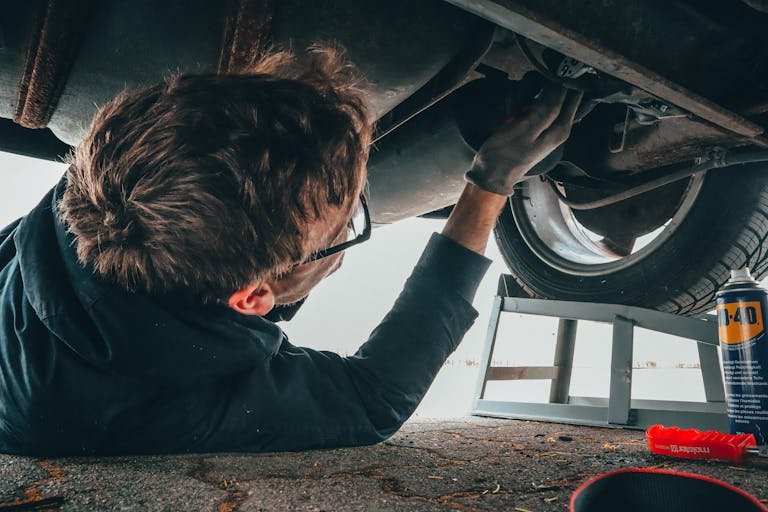
Park on flat concrete, set the parking brake and chock the wheels that stay on the ground. Lift with a floor jack at the jack point, then set the stands under the frame or the reinforced pinch weld, not under suspension parts that can move.
Lower the car slowly onto the stands, then give the car a firm shove. If anything shifts, lift it back up and reset. Leave the floor jack lightly in place as a backup while you work.
Keep Reading
- Best Torque Wrenches for Automotive Work
- Automotive Tools Explained: What Every Car Owner Actually Needs
- Car Shakes While Driving: A Diagnosis Checklist (What the Vibration Is Telling You)
FAQ
Do I need two or four jack stands?
Two are enough for working on one end of the car. Get four if you plan to lift the whole car for jobs like exhaust work or transmission service.
Where do I place jack stands?
Under the frame rails or the reinforced pinch welds near the wheels, as shown in your owner’s manual. Never under the oil pan, the floor pan or a suspension arm that can pivot.
Are jack stands safer than ramps?
Both are safe when used correctly. Ramps are faster for oil changes. Jack stands are needed any time the wheels have to come off.
How long do jack stands last?
Years, if they stay dry and undamaged. Retire any stand that’s bent, cracked or has a ratchet that doesn’t lock cleanly. Never use one that’s been dropped from height on concrete without inspecting it.