
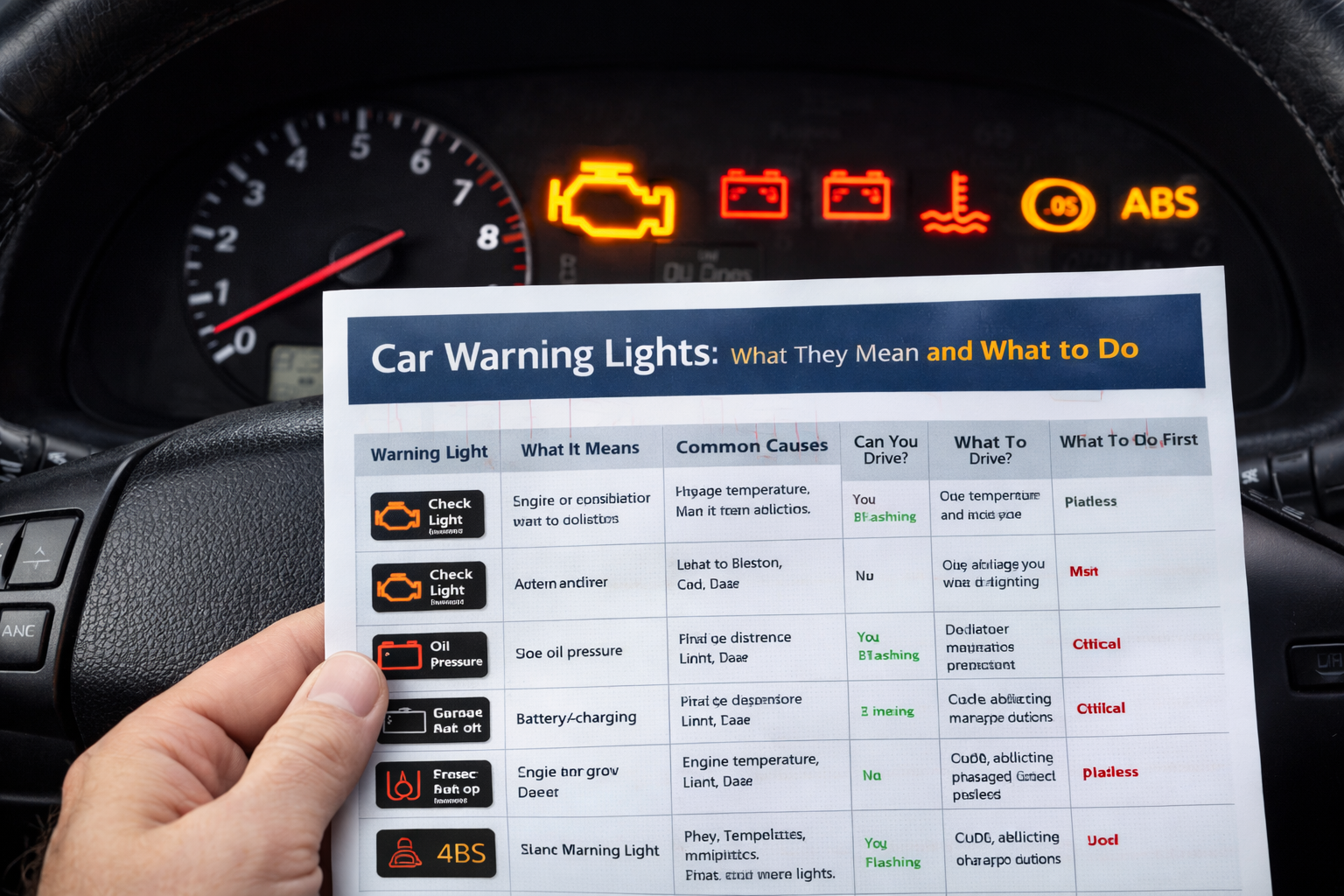
Common Car Warning Lights Explained (What Each One Means and What to Do)
Common Car Warning Lights Explained
Modern vehicles use warning lights to alert drivers when something isn’t working as expected. Some lights signal minor issues. Others warn of problems that can quickly become dangerous or expensive if ignored.
The challenge is knowing which lights matter most, which ones can wait, and what action to take first.
This guide explains the most common car warning lights in plain language—without panic or guesswork.
Warning Lights: What They Mean and What to Do
| Warning Light | What It Means | Common Causes | Can You Drive? | What To Do First | Severity |
|---|---|---|---|---|---|
| Check Engine Light (Solid) | Engine or emissions issue detected | Loose gas cap, sensor fault, minor misfire | Yes (short term) | Note symptoms and scan for codes | Medium |
| Check Engine Light (Flashing) | Active misfire | Ignition failure, fuel issue | No | Stop driving and shut engine off | High |
| Oil Pressure Light | Low oil pressure | Low oil, oil pump failure | No | Pull over and turn engine off | Critical |
| Battery / Charging Light | Charging system issue | Failing alternator, loose belt | Limited | Reduce electrical use and test system | High |
| Engine Temperature Light | Engine overheating | Low coolant, cooling failure | No | Stop driving and let engine cool | Critical |
| Brake Warning Light | Brake system issue | Low brake fluid, brake fault | No / Limited | Check parking brake and fluid level | High |
| ABS Light | ABS system disabled | Sensor or wiring fault | Yes | Drive cautiously, diagnose soon | Medium |
| TPMS Light | Low tire pressure | Underinflated tire, temperature change | Yes | Check and inflate tires | Low |
| Power Steering Light | Steering assist problem | Low fluid, electrical fault | Limited | Expect heavy steering, inspect system | Medium |
| Traction Control Light | Stability system issue | Wheel speed sensor fault | Yes | Avoid aggressive driving | Low |
| Airbag / SRS Light | Airbag system fault | Sensor or module issue | Yes | Schedule inspection soon | Medium |
How to Use This Chart Correctly
If the light is flashing, treat it as urgent
If the car feels unsafe or unstable, stop driving
If multiple lights appear together, suspect electrical or charging issues
Always diagnose before replacing parts
Warning lights are information, not automatic repair bills.
Most Common Driver Mistakes
Ignoring a flashing check engine light
Continuing to drive with an oil pressure warning
Resetting lights without fixing the cause
Replacing parts based on the light alone
Experienced mechanics diagnose systems first, parts second.
When to Stop Driving Immediately
Stop driving if you see:
Oil pressure warning light
Flashing check engine light
Overheating temperature warning
Severe brake warning indicators
These conditions can cause rapid damage or safety risks.
When Limited Driving Is Usually OK
Short trips may be acceptable when:
Check engine light is solid
TPMS light is on with normal handling
ABS light is on but brakes feel normal
Battery light appears briefly
Diagnosis should still happen as soon as possible.
Why Cars Use Warning Lights
Warning lights are part of your car’s onboard monitoring systems. When a sensor detects data outside normal limits, the vehicle alerts you through the dashboard.
A warning light does not automatically mean:
- A part has failed
- The car must stop immediately
- An expensive repair is required
It does mean the vehicle wants attention.
Check Engine Light
The most misunderstood warning light.
What it usually means:
- An engine or emissions-related issue
- A stored diagnostic trouble code
- Further diagnosis is required
What to do:
- Determine if the light is solid or flashing
- Observe how the car feels
- Retrieve the diagnostic code
A flashing check engine light requires immediate attention.
Oil Pressure Warning Light
This light is serious.
What it usually means:
- Low oil pressure
- Oil circulation problem
- Risk of engine damage
What to do:
- Safely pull over
- Shut off the engine
- Check oil level
- Do not continue driving if the light stays on
Driving with low oil pressure can destroy an engine quickly.
Battery / Charging System Light
This light relates to your electrical charging system.
Common causes:
- Failing alternator
- Loose or damaged belt
- Electrical wiring issues
- Weak battery connections
What to do:
- Reduce electrical load
- Avoid unnecessary driving
- Have the charging system tested soon
If ignored, the car may eventually stall and fail to restart.
Temperature Warning Light
This light indicates overheating.
What it usually means:
- Low coolant
- Cooling system failure
- Thermostat or fan issues
What to do:
- Pull over safely
- Shut off the engine
- Allow the car to cool
- Do not open the radiator while hot
Overheating can cause permanent engine damage if ignored.
Brake Warning Light
Brake warning lights should never be ignored.
Possible meanings:
- Parking brake engaged
- Low brake fluid
- Brake system fault
What to do:
- Confirm the parking brake is released
- Check brake fluid level
- Have brakes inspected if the light remains on
Brake system issues are safety-critical.
ABS Warning Light
The ABS light relates to anti-lock braking, not normal braking.
What it usually means:
- ABS system is disabled
- Standard braking still works
- Reduced traction control function
What to do:
- Drive cautiously
- Avoid hard braking on slippery surfaces
- Schedule diagnostic testing
ABS lights don’t usually require immediate stopping but should not be ignored.
Tire Pressure Monitoring System (TPMS) Light
This light monitors tire inflation.
Common causes:
- Low tire pressure
- Temperature changes
- Faulty tire pressure sensor
What to do:
- Check and inflate tires to proper pressure
- Reset the system if required
- Inspect tires for damage
Driving on underinflated tires reduces safety and fuel economy.
Power Steering Warning Light
This indicates a steering assist issue.
Possible causes:
- Low power steering fluid
- Electrical steering system fault
- Sensor problems
What to do:
- Expect heavier steering
- Drive cautiously
- Have the system inspected
Steering may still function but with increased effort.
Which Warning Lights Mean “Stop Driving”
Stop driving immediately if you see:
- Flashing check engine light
- Oil pressure warning light
- Temperature warning light with overheating symptoms
- Severe brake warning indicators
These lights signal conditions that can cause rapid damage or safety risks.
Why Multiple Warning Lights Can Appear Together
Sometimes one failure triggers multiple lights.
Examples:
- Low voltage causing multiple electrical warnings
- Engine issues affecting traction and stability systems
- Sensor failures confusing related systems
This is why diagnostics—not guessing—matter.
The Bottom Line
Warning lights are communication tools, not panic alarms.
Some lights require immediate action. Others allow limited driving while you plan repairs. Understanding the difference helps you:
- Avoid unnecessary repairs
- Prevent serious damage
- Make informed decisions
- Communicate clearly with mechanics
If a warning light appears and you’re unsure what it means, diagnosing the issue early is always cheaper than waiting.
Frequently Asked Questions
What is the most serious warning light on a car?
The oil pressure warning light and a flashing check engine light are among the most serious. Both can indicate conditions that may cause rapid engine damage if ignored.
Can warning lights come on because of a sensor problem?
Yes. Faulty sensors or wiring issues can trigger warning lights even when a mechanical component is still working. This is why proper diagnosis matters before replacing parts.
Why do multiple warning lights turn on at once?
Multiple lights often appear together due to low voltage, battery or alternator issues, or a single failure affecting multiple systems.
Is it safe to reset warning lights without fixing the problem?
No. Resetting warning lights does not solve the underlying issue. If the problem remains, the light will return and damage may worsen.
Do warning lights always mean I need a mechanic right away?
Not always. Some lights allow short-term driving, while others require immediate attention. Understanding which category the light falls into is key.
Will a parts store scan explain every warning light?
A scan can identify stored codes for many warning lights, but some systems require further testing to confirm the exact cause.


