
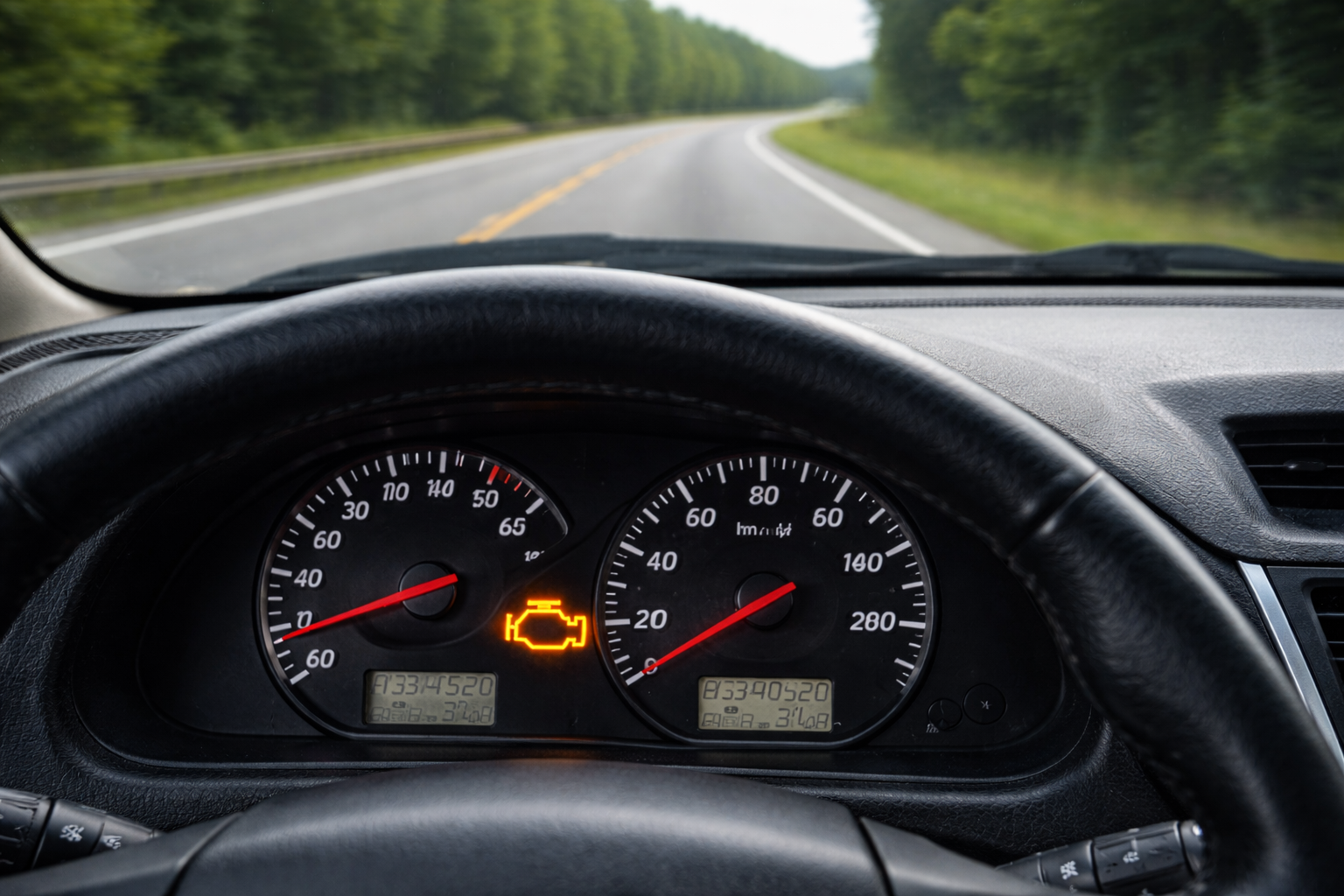
Can You Drive With a Check Engine Light On? (When It’s Safe and When It’s Not)
Can You Drive With a Check Engine Light On?
One of the most common questions drivers ask after seeing a check engine light is simple:
Can I keep driving, or do I need to stop right now?
The answer depends on how the light is behaving and how the car feels. In some cases, driving briefly is fine. In others, continuing to drive can cause serious and expensive damage.
Understanding the difference can save you money—and your engine.
First Rule: Check the Light Behavior
Before anything else, look at how the check engine light appears.
A solid (steady) check engine light usually means:
- A non-urgent issue
- Reduced efficiency or emissions
- The car can often be driven short distances
A flashing check engine light usually means:
- An active engine misfire
- Unburned fuel entering the exhaust
- Risk of catalytic converter damage
A flashing light is a warning to stop driving as soon as it’s safe.
When It’s Usually Safe to Drive (Short Term)
You may be able to drive temporarily if all of the following are true:
- The check engine light is solid, not flashing
- The car drives normally
- No shaking, hesitation, or loss of power
- No burning or fuel smells
- No unusual noises
In these cases, the vehicle is often safe for short trips while you plan diagnostics or a repair.
This does not mean the issue should be ignored—only that it is not an immediate emergency.
When You Should Not Drive
You should stop driving and seek help if:
- The check engine light is flashing
- The engine is shaking or running rough
- Acceleration is severely reduced
- The car stalls or struggles to stay running
- You smell fuel, burning, or sulfur
- The temperature gauge rises abnormally
Continuing to drive under these conditions can:
- Damage the catalytic converter
- Cause engine overheating
- Lead to complete breakdown
- Multiply repair costs
Why Driving With a Flashing Light Is Dangerous
A flashing check engine light most often indicates a misfire.
When a misfire occurs:
- Fuel is not burned properly
- Unburned fuel enters the exhaust
- The catalytic converter overheats
Catalytic converters are expensive. Prolonged driving with a misfire can turn a relatively small ignition issue into a major repair.
What to Do If the Light Comes On While Driving
If the light appears while you’re already on the road:
- Pay attention to how the car feels immediately
- Reduce speed and avoid hard acceleration
- Avoid towing or heavy loads
- Get the vehicle scanned as soon as possible
If the light begins flashing, safely pull over and shut the engine off.
Can Short Trips Still Cause Damage?
Yes—depending on the problem.
Some issues, like minor sensor faults, may not worsen quickly. Others, like misfires or overheating, can cause damage in minutes.
This is why diagnostics matter. The light alone doesn’t tell the whole story—the symptoms do.
Why You Should Scan the Car Even If It Feels Fine
A car can feel normal while still storing diagnostic trouble codes.
Scanning the vehicle:
- Identifies which system triggered the light
- Helps determine urgency
- Prevents guessing
- Guides the next step
Even a free scan at a parts store is better than ignoring the issue.
When Driving “A Little Longer” Becomes Risky
Delaying diagnosis often leads to:
- Additional fault codes
- Secondary failures
- Reduced fuel economy
- Higher repair costs
The check engine light is designed to warn early—before damage occurs.
The Bottom Line
You can sometimes drive with a check engine light on—but only when conditions are right.
Safe (short term):
- Solid light
- Normal driving behavior
- No warning signs
Not safe:
- Flashing light
- Rough running
- Power loss
- Overheating or strong smells
If you’re unsure, treat the situation as serious until proven otherwise. Diagnosis always comes before decision-making.
Frequently Asked Questions
Can I drive long distances with the check engine light on?
It depends on the issue. If the light is solid and the car drives normally, short trips are often okay. Long-distance driving without diagnosis increases the risk of further damage and higher repair costs.
How long can you drive with a check engine light on?
There is no fixed timeframe. Some issues can worsen quickly, while others remain stable for a short period. The safest approach is to diagnose the problem as soon as possible instead of relying on time or distance.
Will the check engine light turn off by itself?
Sometimes. If the issue was temporary—such as a loose gas cap—the light may turn off after a few drive cycles. If the light returns, the underlying problem still needs attention.
Is it safe to drive if the check engine light is flashing?
No. A flashing check engine light usually indicates an active misfire and potential catalytic converter damage. You should stop driving as soon as it is safe and have the vehicle inspected.
Can low oil cause the check engine light to come on?
Low oil can trigger engine-related warning lights or cause conditions that lead to a check engine light. Oil level should always be checked when a warning light appears.
Does a check engine light always mean an expensive repair?
No. Many check engine lights are caused by minor issues such as sensors, vacuum leaks, or loose components. Proper diagnosis helps prevent unnecessary spending.
Can I reset the check engine light and keep driving?
Resetting the light without fixing the problem does not solve the issue. The light will often return, and ignoring the cause can lead to more serious damage over time.
Should I get a diagnostic scan even if the car feels fine?
Yes. A car can drive normally while still storing fault codes. A scan helps identify issues early before symptoms worsen or repairs become more expensive.


