
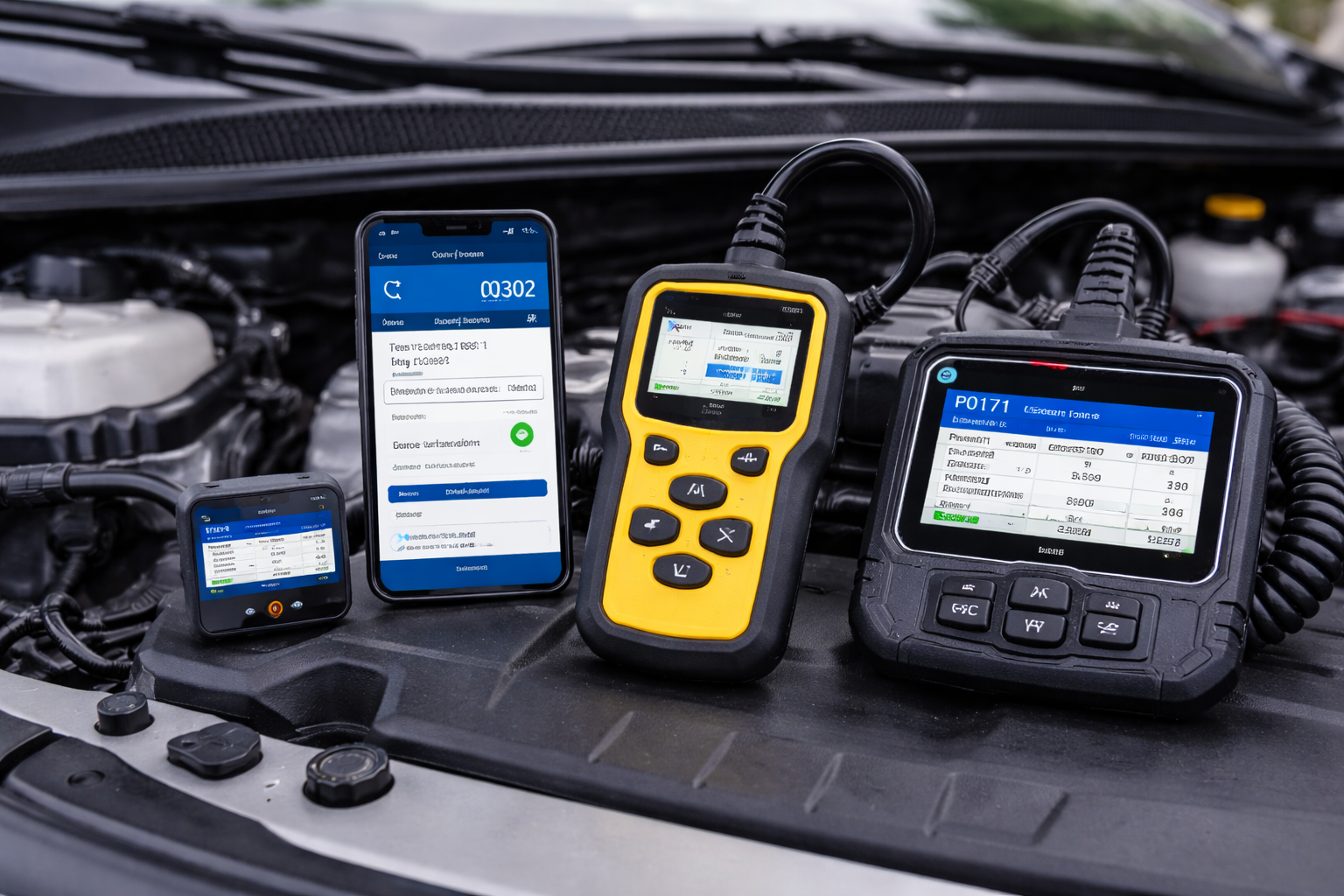
Best OBD2 Scanners for DIY Mechanics (What Actually Works)
Best OBD2 Scanners for DIY Mechanics
If you’re a DIY mechanic—or just a car owner who wants answers before paying for repairs—an OBD2 scanner is the most valuable tool you can own.
It doesn’t fix the car for you.
What it does is stop guessing.
A good OBD2 scanner tells you:
- Why the check engine light came on
- Which system detected a problem
- Whether the issue is urgent or minor
- What to research before replacing parts
his guide covers the best OBD2 scanners for DIY mechanics, what features actually matter, and how to choose the right one without overpaying.
What DIY Mechanics Actually Need From an OBD2 Scanner
Most people buy the wrong scanner because they focus on features they’ll never use.
DIY mechanics need scanners that:
- Read and clear engine codes reliably
- Show live data in plain language
- Work with most vehicles (1996+)
- Don’t require dealer-level knowledge
- Help decide what to do next
You do not need programming tools, bidirectional controls, or shop-level diagnostics to make smart decisions.
Types of OBD2 Scanners
There are three types worth considering.
Basic handheld scanners
Bluetooth scanners that pair with your phone
Mid-range scanners with live data and system access
Professional scan tools are unnecessary for most DIY users.
Best OBD2 Scanners for DIY Mechanics (Quick Picks)
These are reliable, beginner-friendly, and proven to work well for everyday diagnostics.
Best Overall OBD2 Scanner for DIY Mechanics
Bluetooth OBD2 Scanner (App-Based)
Why it’s best:
- Uses your phone screen
- Easy to understand
- Shows live data
- Works on most vehicles
- Frequent app updates
Best for: beginners and everyday DIY diagnostics
Best Handheld OBD2 Scanner (No Phone Required)
Why it’s good:
- Simple screen
- No apps or pairing
- Reads and clears codes fast
- Reliable and durable
Best for: quick checks and glove-box storage
Best Mid-Range OBD2 Scanner for Advanced DIY
Enhanced Scan Tool with Live Data
Why it’s useful:
- Accesses more vehicle systems
- Displays real-time sensor data
- Better diagnostics for recurring issues
Best for: DIY mechanics who work on multiple vehicles
OBD2 Scanner Comparison (DIY Focused)
| Scanner Type | Best For | Pros | Cons | Skill Level |
|---|---|---|---|---|
| Basic Handheld | Quick code checks | Simple, reliable | Limited data | Beginner |
| Bluetooth Scanner | Everyday DIY | Live data, apps | Needs phone | Beginner–Intermediate |
| Mid-Range Scanner | Advanced DIY | More system access | Higher cost | Intermediate |
| Professional Tool | Repair shops | Full diagnostics | Overkill | Advanced |
Features That Matter (And Ones That Don’t)
Must-Have Features
- Reads and clears engine codes
- Displays code descriptions
- Live data (RPM, coolant temp, O2 sensors)
- Works on most 1996+ vehicles
Nice-to-Have Features
- Freeze-frame data
- Emissions readiness status
- Bluetooth connectivity
Features You Can Skip
- ECU programming
- Bidirectional controls
- Dealer-level functions
- Subscription-heavy tools
More features don’t equal better diagnostics.
How an OBD2 Scanner Saves You Money
A scanner helps you:
- Avoid unnecessary part replacements
- Identify loose gas caps and minor faults
- Catch problems early
- Decide when a repair is urgent
- Communicate clearly with mechanics
Many people recover the cost of a scanner after one avoided misdiagnosis.
Common Mistakes DIY Mechanics Make With Scanners
- Replacing the part named in the code
- Ignoring live data
- Clearing codes without understanding the cause
- Assuming all scanners work the same
A code points to where to look, not what to replace.
When a Scanner Is Enough (And When It Isn’t)
A scanner is often enough when:
- The check engine light is solid
- The issue is intermittent
- You want to confirm a diagnosis
You’ll need more testing when:
- Multiple codes appear
- Electrical issues are suspected
- The problem returns quickly
- The car runs poorly despite no codes
Best Use Case Scenarios
Scanner + basic tools = strong DIY setup
Ideal for:
- Check engine light diagnosis
- No-start troubleshooting
- Rough idle issues
- Emissions readiness checks
- Pre-purchase inspections
Which OBD2 Scanner Should You Choose?
Choose based on how you work, not hype.
If you want simplicity → handheld scanner
If you want the best value → Bluetooth scanner
If you work on multiple cars → mid-range scanner
For most DIY mechanics, a Bluetooth OBD2 scanner offers the best balance of price, power, and usability.
The Bottom Line
An OBD2 scanner is not a mechanic replacement—it’s a decision-making tool.
The best scanner for DIY mechanics:
- Gives clear information
- Reduces guesswork
- Prevents unnecessary repairs
- Pays for itself quickly
If you own a car and want control over repair decisions, this is the first tool you should buy.
Frequently Asked Questions
Are OBD2 scanners safe to use on any car?
Yes. OBD2 scanners are designed to safely read data from vehicles manufactured in 1996 or newer. Reading codes does not damage the vehicle or its computer.
Can an OBD2 scanner fix my car?
No. An OBD2 scanner does not fix problems—it provides information. It tells you which system detected an issue so you can diagnose and repair it correctly.
Do I need a professional OBD2 scanner as a DIY mechanic?
No. Professional scan tools are designed for repair shops and include advanced features most DIY mechanics don’t need. A basic or Bluetooth scanner is usually sufficient.
Why does my scanner show a code but the car runs fine?
Some issues are intermittent or minor and don’t immediately affect performance. A stored code means the system detected something abnormal, even if symptoms aren’t obvious yet.
Can I clear the check engine light with an OBD2 scanner?
Yes. Most scanners can clear codes. However, if the underlying issue isn’t fixed, the check engine light will usually return after a few drive cycles.
Will an OBD2 scanner tell me exactly what part to replace?
Not always. A code points to a system or condition, not a guaranteed failed part. Further testing is often required to confirm the root cause.
Are Bluetooth OBD2 scanners better than handheld scanners?
Bluetooth scanners offer more features and live data using your phone, while handheld scanners are simpler and don’t require an app. Neither is “better”—it depends on how you prefer to work.
Can I use the same OBD2 scanner on multiple vehicles?
Yes. Most OBD2 scanners work on multiple vehicles as long as they are OBD2-compliant. This makes them especially valuable for households with more than one car.


