
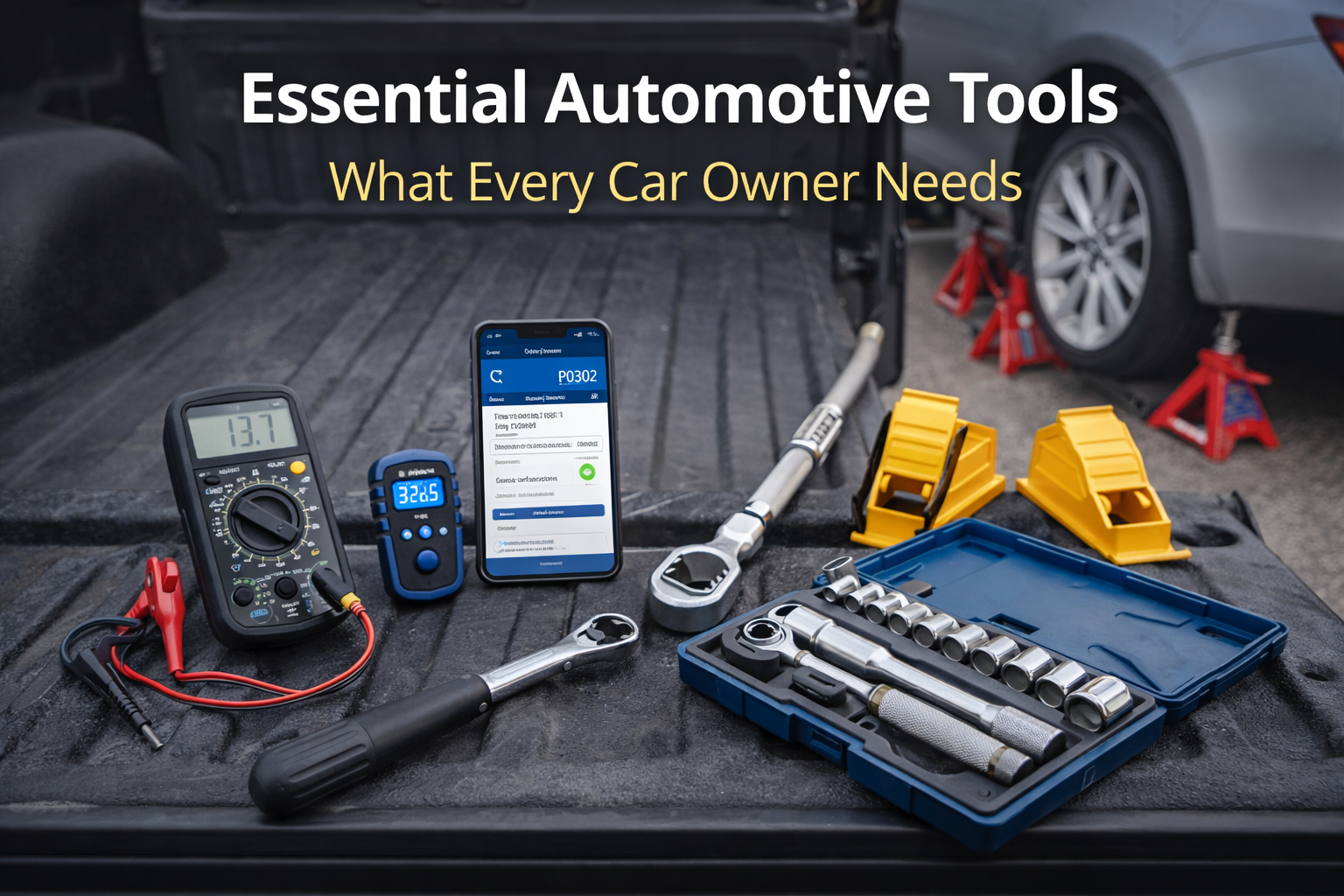
Automotive Tools Explained: What Every Car Owner Actually Needs
Automotive Tools Explained: What Every Car Owner Actually Needs
Walk into any auto parts store or browse online and you’ll see hundreds of automotive tools promising to fix every problem imaginable. For most car owners, this creates confusion – not clarity.
The reality is simple:
you don’t need a professional mechanic’s toolbox to understand, maintain, or make smart decisions about your car.
What you do need is a small, practical set of automotive tools that help you diagnose issues, handle basic maintenance safely, and avoid unnecessary repairs.
This guide explains which automotive tools actually matter, what each one does, and how to build a tool kit that makes sense for real car owners.
The Biggest Mistake Car Owners Make With Tools
The most common mistake is buying tools reactively—after a problem appears—without understanding what’s actually needed. This often leads to:
- Buying tools you’ll never use again
- Replacing parts unnecessarily
- Spending more than required
- Creating unsafe situations
Experienced mechanics follow a different approach:
- Diagnose first
- Use the simplest tool that provides answers
- Avoid specialty tools unless absolutely required
Car owners should do the same.
The Three Categories of Automotive Tools That Matter
Almost every useful automotive tool falls into one of three categories:
Diagnostic tools
Maintenance tools
Safety and lifting equipment
You don’t need dozens of tools in each category—just the right ones.
Diagnostic Tools: Understand the Problem Before Fixing It
Diagnostic tools help you identify what’s wrong before replacing parts. For most car owners, these tools save more money than repair tools ever will.
OBD2 Scanner
An OBD2 scanner reads diagnostic trouble codes stored by your car’s computer.
What it does:
- Reads check engine light codes
- Identifies which system detected a problem
- Helps determine urgency
What it doesn’t do:
- Automatically tell you which part to replace
- Replace proper testing or inspection
For most people, a basic or Bluetooth OBD2 scanner is more than enough.
Multimeter
A multimeter measures voltage, resistance, and continuity.
Useful for:
- Battery testing
- Alternator output checks
- Diagnosing electrical problems
- Verifying wiring and sensor circuits
Electrical issues are frequently misdiagnosed. A multimeter helps you confirm instead of guessing.
Tire Pressure Gauge
A tire pressure gauge is simple, inexpensive, and extremely useful.
Why it matters:
- Improves safety
- Extends tire life
- Improves fuel economy
- Helps verify TPMS warnings
Even cars with tire pressure monitoring systems benefit from manual checks.
Diagnostic Tools Comparison Table
| Tool Level | Best For | What It Can Do | What It Can’t Do |
|---|---|---|---|
| Basic OBD2 Scanner | Beginners | Read and clear codes | Advanced diagnostics |
| Bluetooth OBD2 Scanner | Everyday owners | Live data, mobile apps | Dealer-level functions |
| Mid-Range Scan Tool | Advanced DIY | System diagnostics | Programming modules |
| Professional Scan Tool | Repair shops | Full vehicle access | Cost-effective for owners |
Maintenance Tools: Do the Basics Safely and Correctly
Maintenance tools allow you to handle routine tasks without cutting corners or damaging components.
Socket and Ratchet Set
A basic mechanics socket set covers most everyday needs.
What to look for:
- SAE/Metric sizes
- 3/8-inch drive
- Quality over quantity
Large “mechanic sets” often include many tools you’ll never use.
Torque Wrench
A torque wrench ensures bolts are tightened correctly.
Critical for:
- Wheels
- Engine components
- Suspension parts
Over-tightening causes more damage than under-tightening.
Oil Filter Wrench
An oil filter wrench makes oil changes easier and safer.
Styles include:
- Cap-style
- Strap-style
- Adjustable
Choose one that fits your vehicle’s filter design.
Essential Automotive Tools Comparison Table
| Tool Type | What It’s Used For | Why It Matters | Required for Most Owners |
|---|---|---|---|
| Socket & Ratchet Set | Basic repairs | Covers most fasteners | Yes |
| Torque Wrench | Proper tightening | Prevents damage | Yes |
| Oil Filter Wrench | Oil changes | Convenience | Optional |
| Impact Wrench | Fast removal | Not required | No |
| Specialty Pullers | Advanced repairs | Limited use | No |
Safety and Lifting Equipment: Non-Negotiable Tools
Safety equipment protects you, not just your vehicle.
Floor Jack
A floor jack is used to lift the vehicle safely.
Key features:
- Proper weight rating
- Wide, stable base
- Smooth lifting action
Never rely on a factory scissor jack for maintenance work.
Jack Stands
Jack stands support the vehicle after lifting.
Why they matter:
- Jacks can fail
- Hydraulic pressure can drop
- Redundancy prevents serious injury
Always use jack stands when working under a car.
Wheel Chocks
Simple but essential. Wheel chocks prevent vehicles from rolling.
They:
- Prevent rolling
- Improve stability
- Increase safety during lifting
Safety and Lifting Equipment Comparison Table
| Equipment | Purpose | Why It’s Important | Buy or Skip |
|---|---|---|---|
| Floor Jack | Lifting vehicle | Stable lifting | Buy |
| Jack Stands | Supporting vehicle | Prevents accidents | Buy |
| Wheel Chocks | Prevent rolling | Added safety | Buy |
| Factory Scissor Jack | Emergencies only | Unsafe for repairs | Skip |
| Ramps | Oil changes | Limited use | Optional |
Tools Most Car Owners Do NOT Need
Unless you’re performing advanced repairs, you can skip:
- Engine hoists
- Transmission jacks
- Specialty pullers
- Dealer-level scan tools
- Air compressors for occasional work
These tools are expensive and rarely justified for everyday use.
Building a Practical Tool Kit Over Time
The smartest approach is gradual:
- Start with diagnostics
- Add maintenance tools as needed
- Invest in safety equipment early
- Expand only when repairs justify it
Beginner vs Advanced Tool Kit Comparison
| Tool Category | Beginner Kit | Advanced DIY Kit |
|---|---|---|
| Diagnostics | Basic OBD2 scanner | Mid-range scan tool |
| Hand Tools | Socket set | Full metric set |
| Electrical | Multimeter | Multimeter + probes |
| Lifting | Jack + stands | Jack + stands + ramps |
| Specialty Tools | None | As needed |
How Tools Help Even If You Don’t DIY Repairs
Even if you never plan to fix your own car, tools help you:
- Understand what’s wrong
- Avoid unnecessary repairs
- Communicate clearly with mechanics
- Verify basic claims
- Make confident decisions
Knowledge is leverage.
The Bottom Line
You don’t need a garage full of tools to be a smart car owner.
You need:
- Tools that help you understand problems
- Equipment that supports safe maintenance
- Gear that protects you while working
The right automotive tools don’t make you a mechanic—they make you informed.
Frequently Asked Questions
What is the most important automotive tool to own?
For modern vehicles, an OBD2 scanner is the most valuable tool because it helps identify problems before repairs begin.
Do I need expensive tools to work on my car?
No. Most car owners only need mid-range tools for diagnostics and basic maintenance.
Are cheap automotive tools safe to use?
Some inexpensive tools are fine, but safety-related equipment should never be the cheapest option.
Can I maintain my car without lifting it?
Some tasks can be done without lifting, but many require safe lifting equipment.
Is it better to buy tools or rent them?
Rent specialty tools you’ll rarely use. Buy tools you expect to use repeatedly.
Do tools help if I don’t plan to fix my car myself?
Yes. Tools help you diagnose issues and avoid unnecessary repairs even if you don’t do the work.


